jonathanwaring.net Est. January 2010 (v1.0)

11Nov/110

The Green Man & Regular Fellows: Images and Reviews

Sunday Lunch at The Green Man

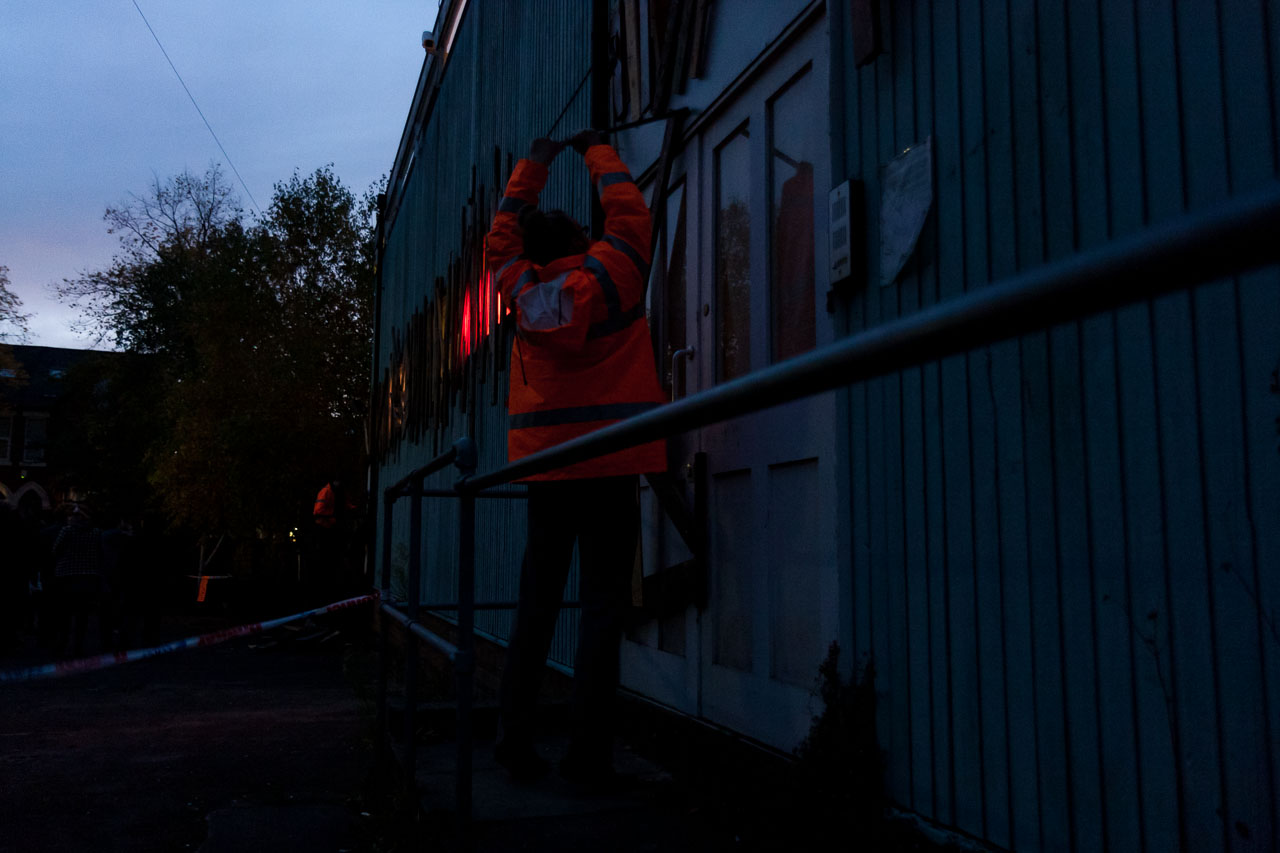
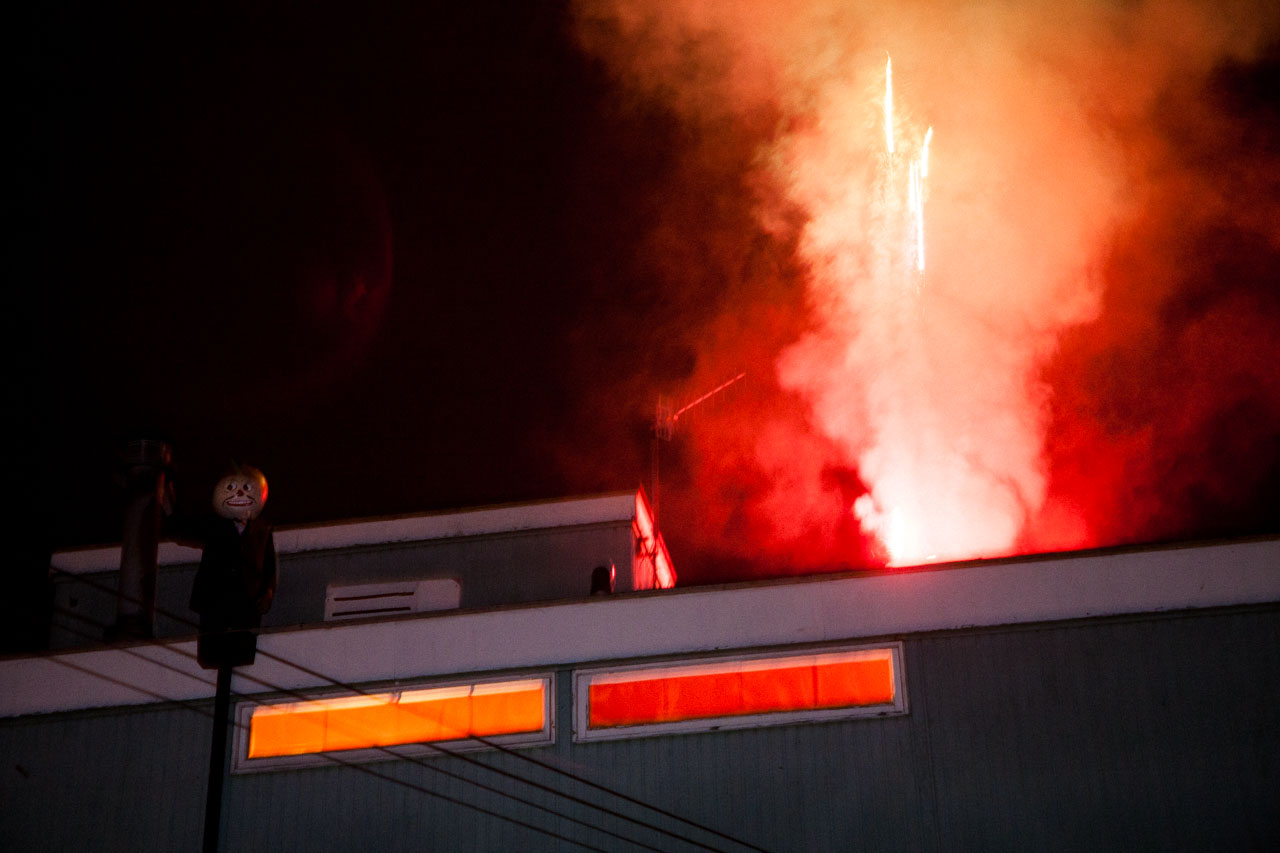
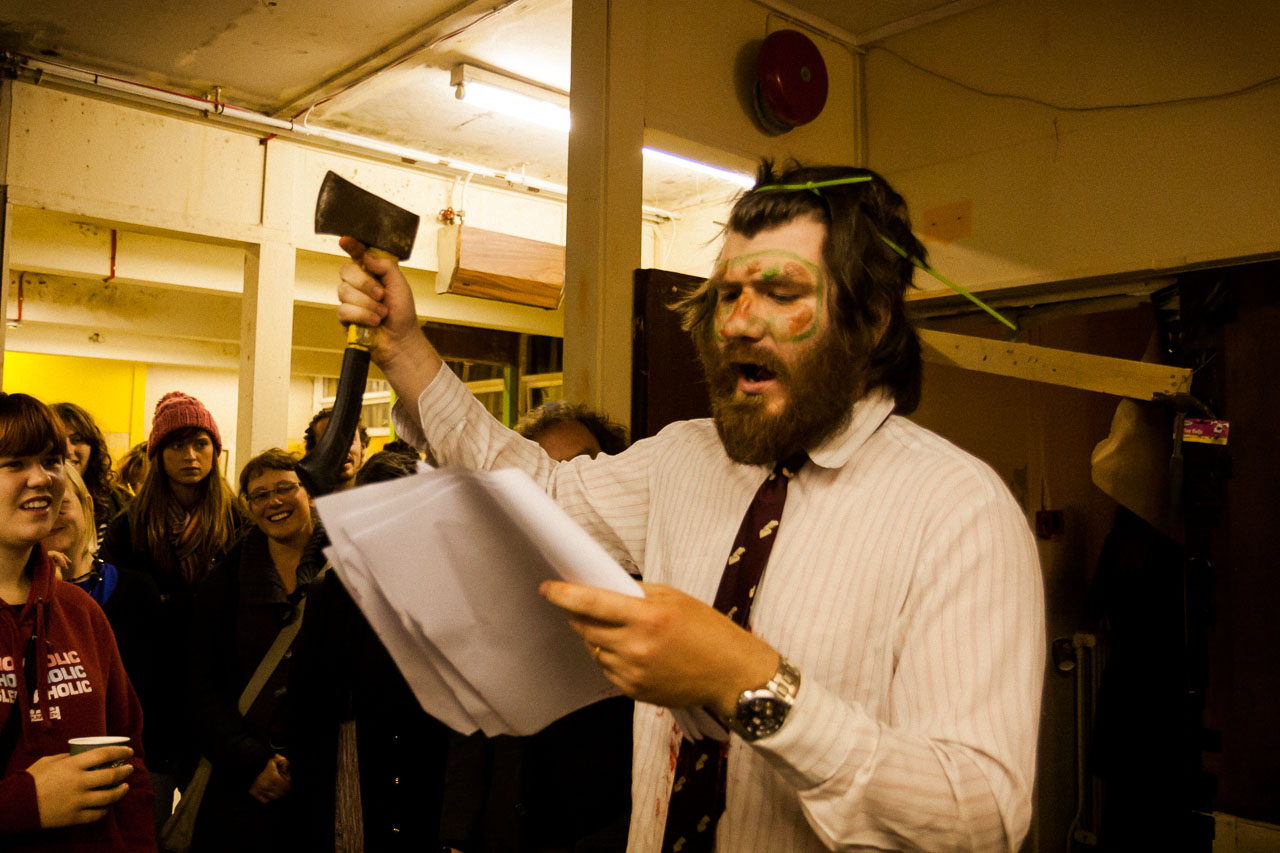
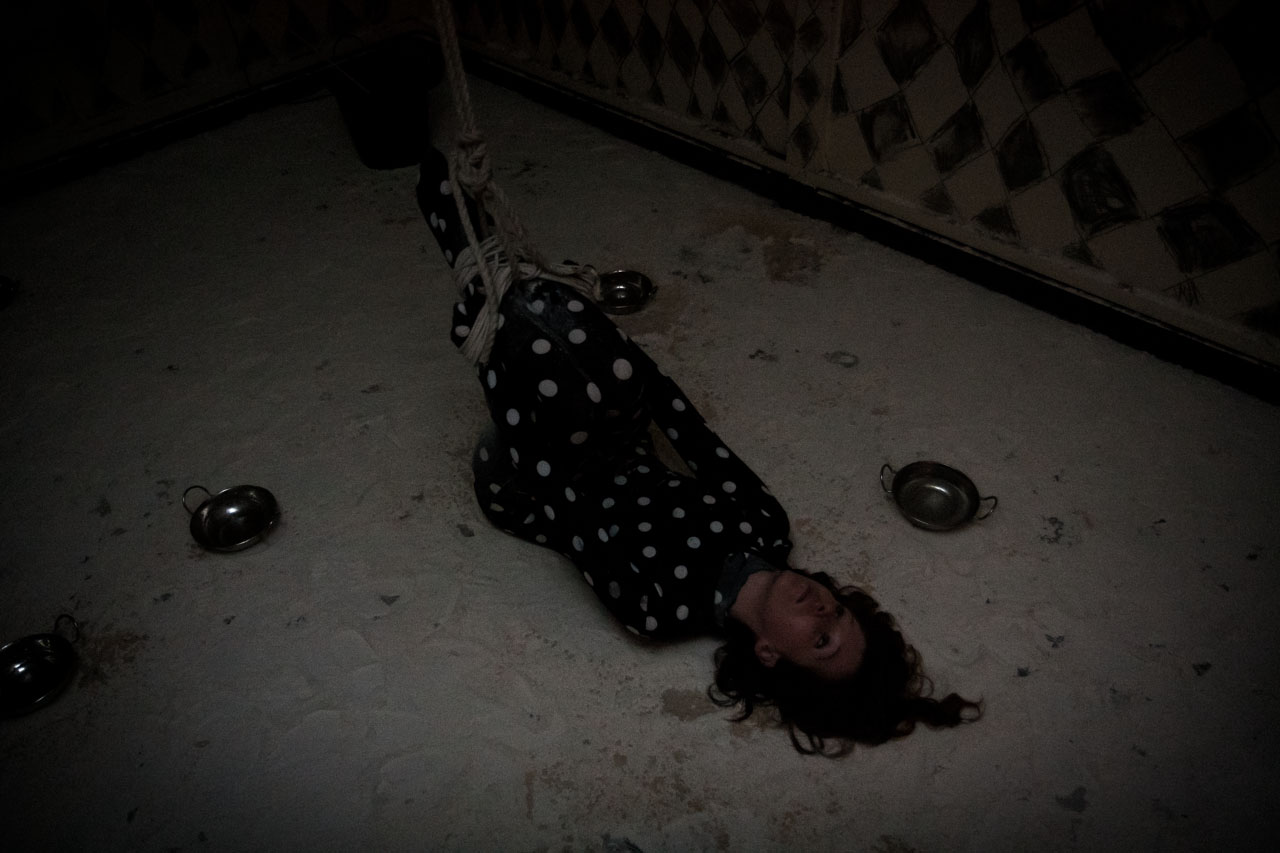
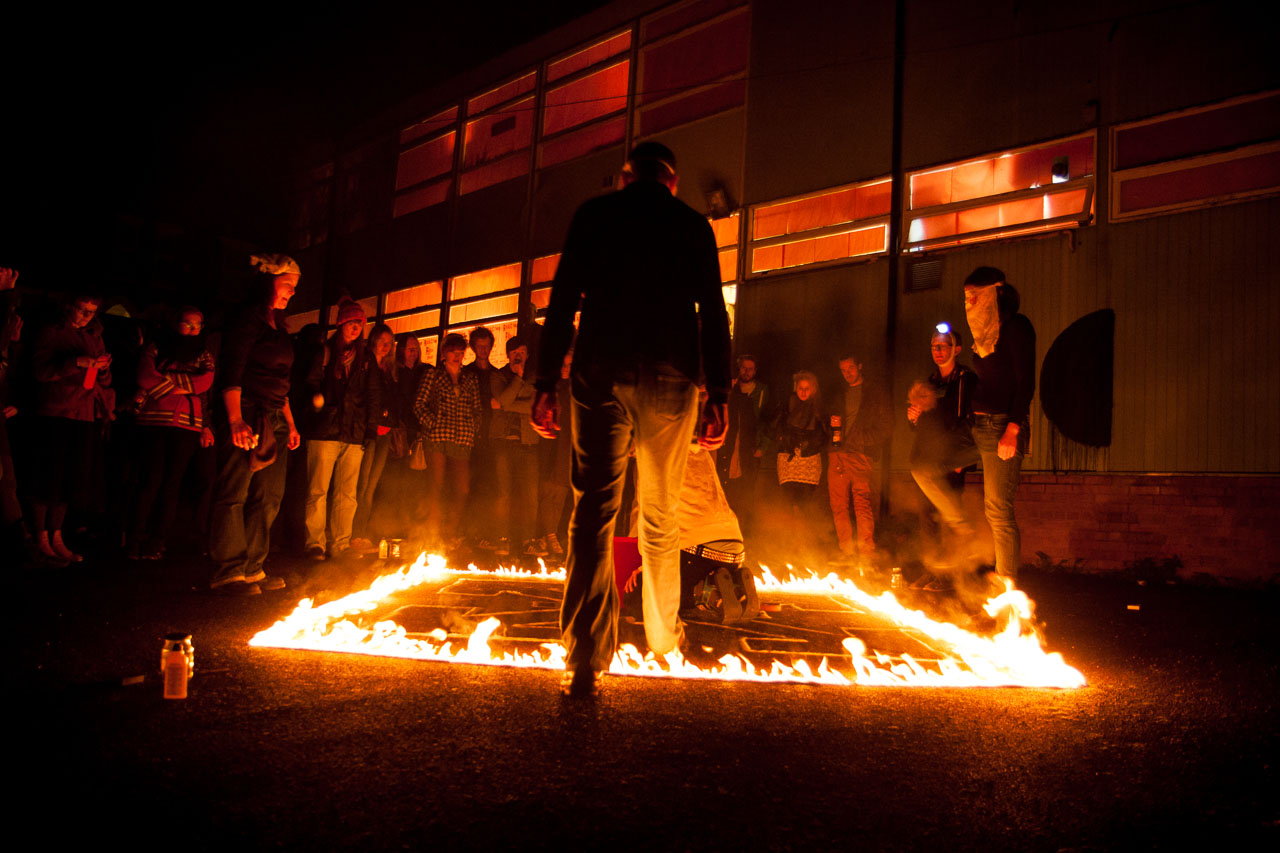
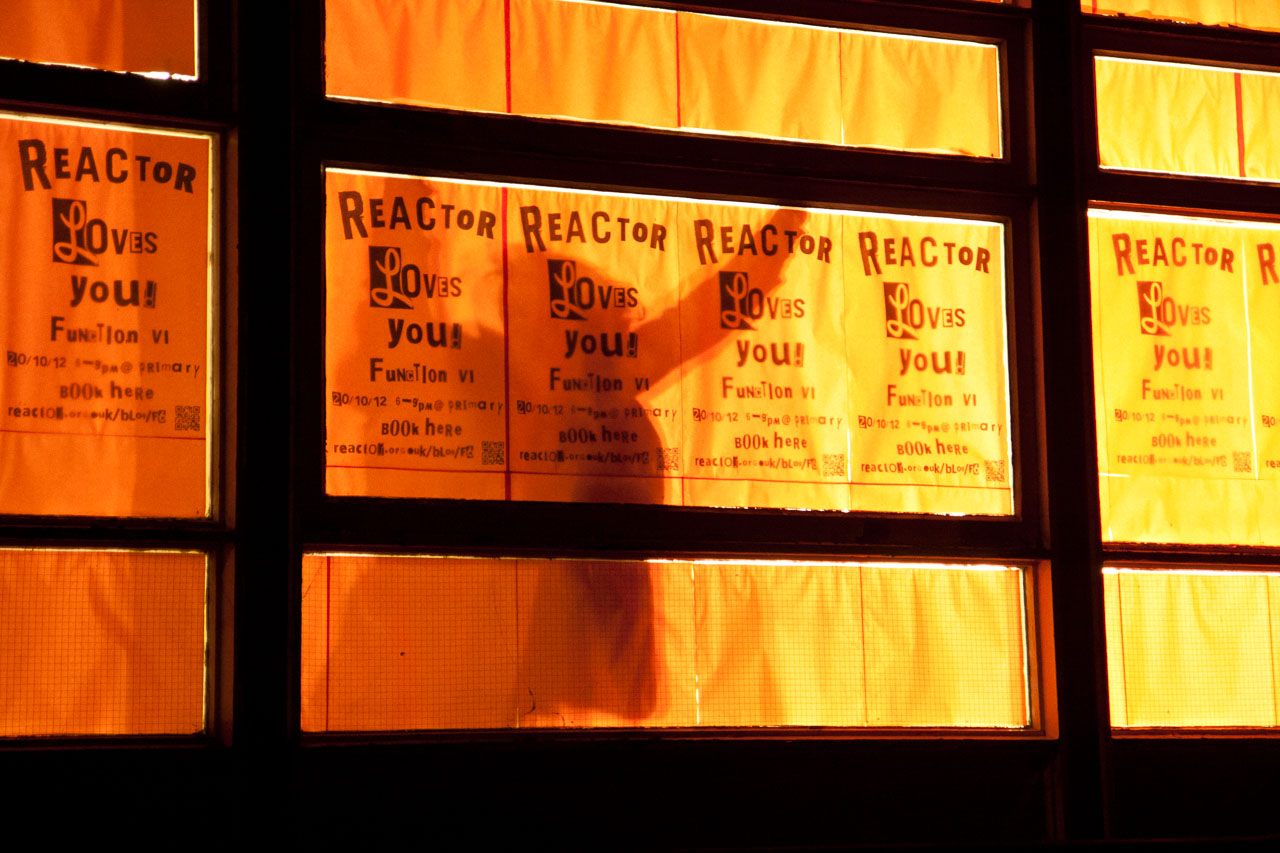
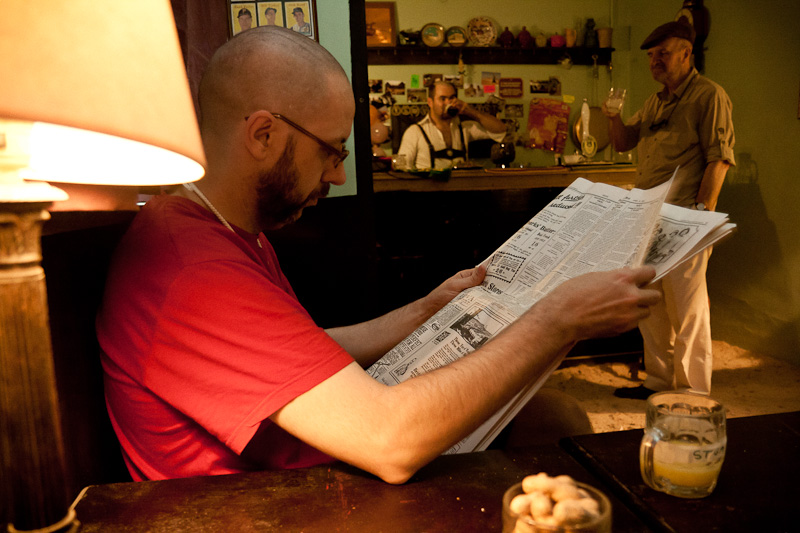
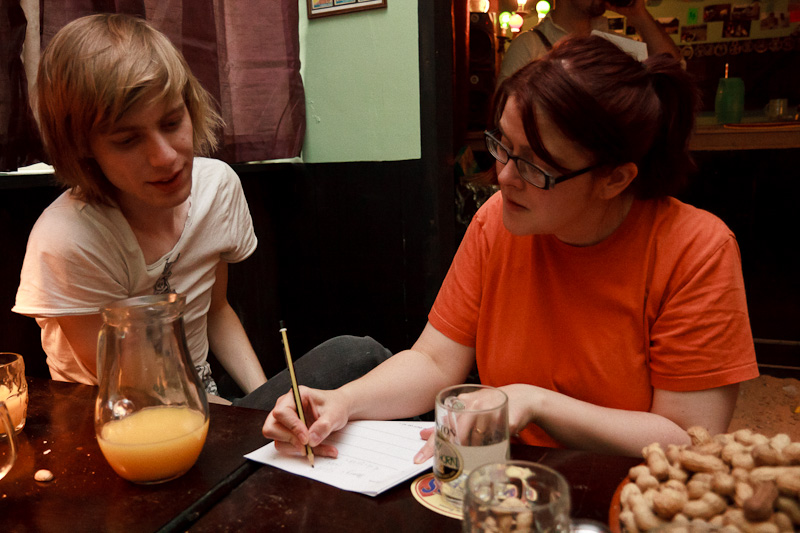
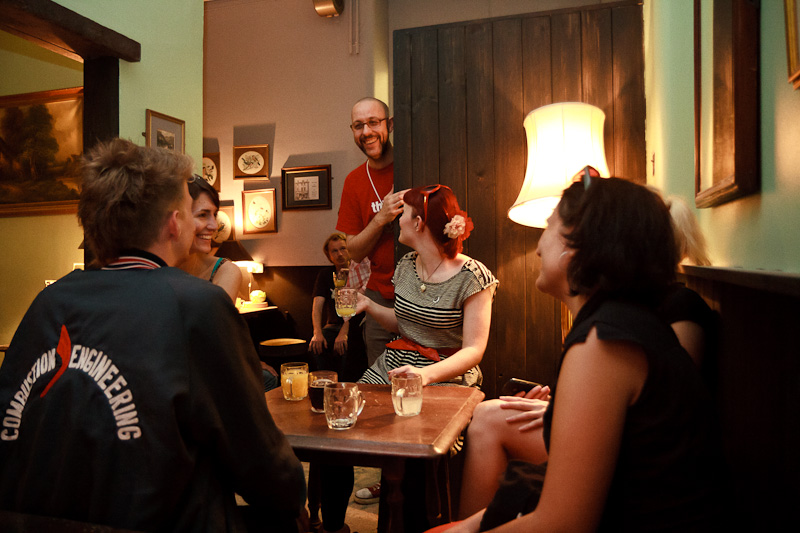
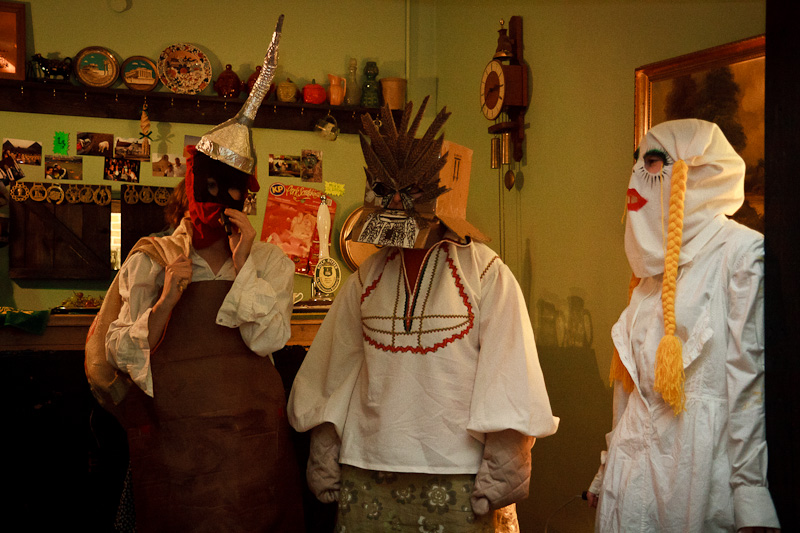
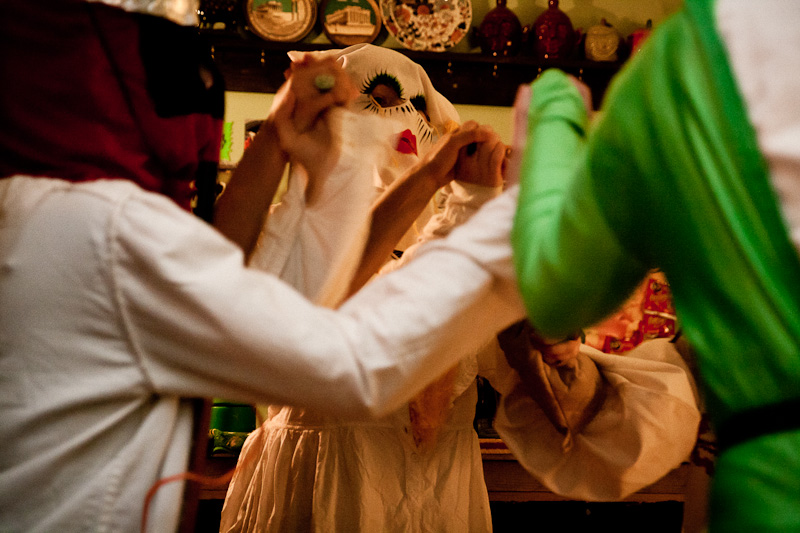
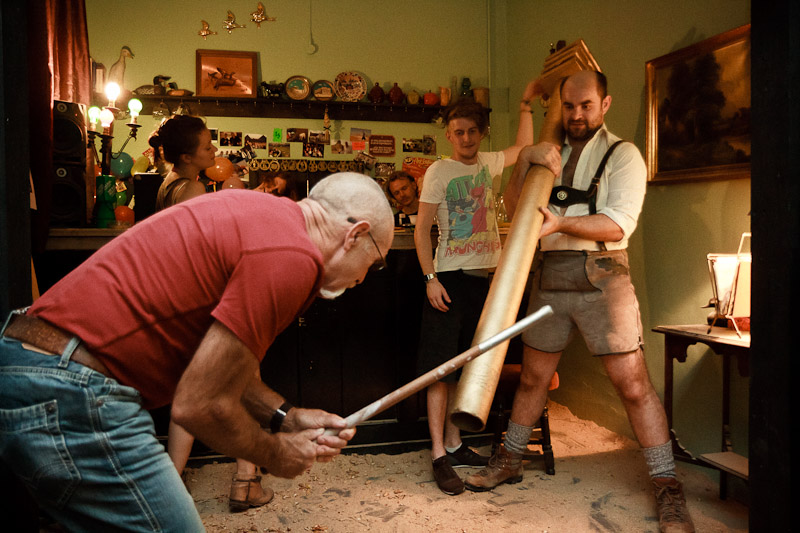
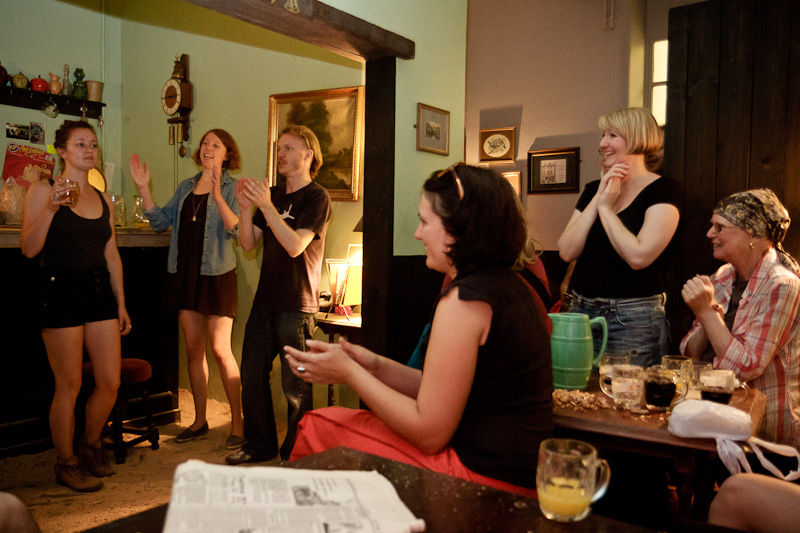
Here are some of the photographs that I took at Reactor's The Green Man & Regular Fellows. The event took place in Nottingham across Friday, Saturday and Sunday evenings of the last weekend in September. In honour of traditional pub opening hours The Green Man also had a Sunday lunchtime opening, where I took these photographs, featuring a pub quiz with a Harvest Festival hamper prize.

I only briefly stopped by the The Green Man on Friday night, before heading off again for a friend's birthday meal. But I was there all night Saturday (including the lock-in), for Sunday lunch, and then back that evening for last orders.

Scroll to the bottom of the post for reviews by Aaron Juneau and Jack Vickers.
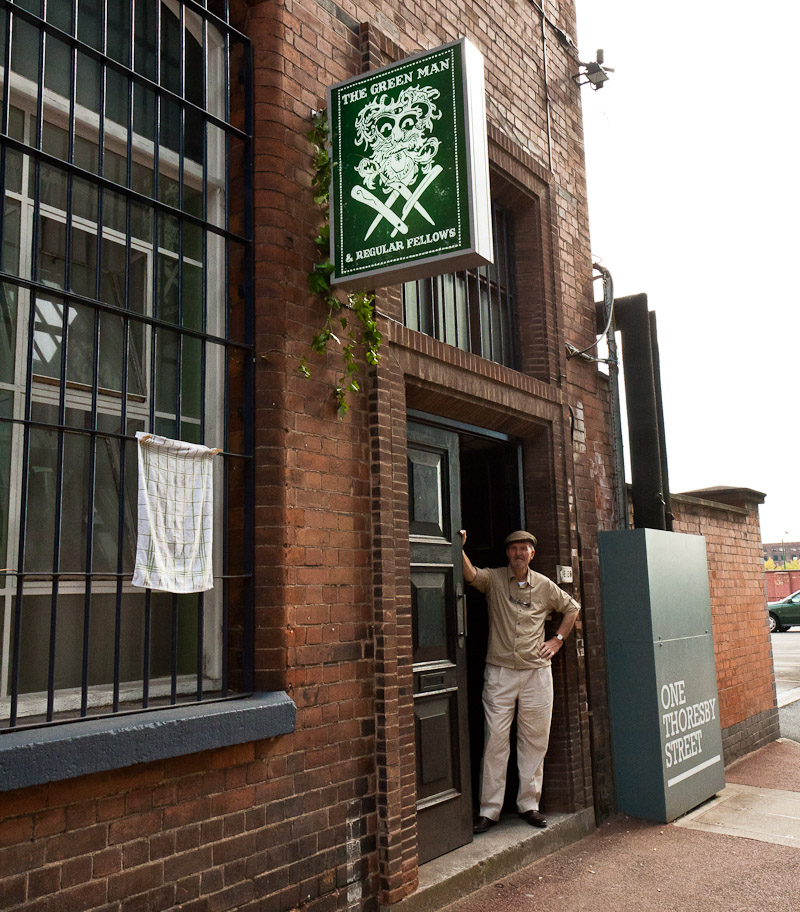
Reactor: The Green Man and Regular Fellows

Reactor: The Green Man and Regular Fellows

Reactor: The Green Man and Regular Fellows

Reactor: The Green Man and Regular Fellows

Reactor: The Green Man and Regular Fellows

Reactor: The Green Man and Regular Fellows

Reactor: The Green Man and Regular Fellows

Reactor: The Green Man and Regular Fellows

Reactor: The Green Man and Regular Fellows

Reviews:

a-n Interface (Aaron Juneau)

Nottingham Visual Arts (Jack Vickers)

Share
15Aug/110

Reactor: The Green Man & Regular Fellows

Friday 30 September & Saturday 1 October: 6 pm - 11 pm

Sunday 2 October: 12:00 pm - 2:30 pm & 6:30 pm - 9:30 pm

There’s something brewing in Nottingham… For three days only, Reactor are opening a members-only pub, “The Green Man & Regular Fellows”.
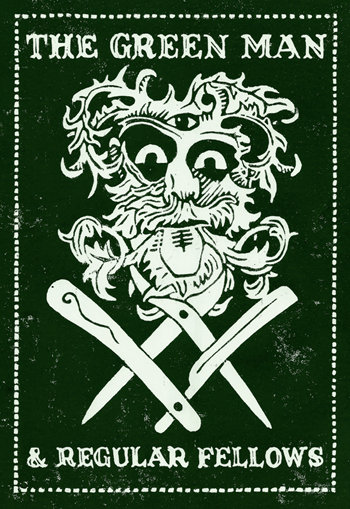
Reactor: The Green Man & Regular FellowsThe Green Man & Regular Fellows is a newly commissioned, live artwork in the form of a pub, complete with adjoining function room. Here Reactor's interest in the the nature of membership as a social construct manifests itself in a series of temporary groups and levels of fellowship. The structure of the work plays with the traditions and conventions of the ‘public house’ and ‘private members’ clubs’, producing unexpectedly dis lodged behaviours.

This brief materialisation of The Green Man & Regular Fellows presents a set of mysteries, inviting speculation about its symbols and purpose. Where did it come from, and who is it for? The Green Man & Regular Fellows offers membership, invites you in for drinks and provides a rich environment of song, laughter and games. As the Landlord calls upon the Regulars to lend a hand and the more Irregular members burst out of the back rooms, the atmosphere increasingly becomes more intense and behaviours more frenzied. It will soon become clear why our Regular Fellows like to come back time and time again.

The project will take place place at Trade Gallery, Nottingham (UK): www.tradegallery.org

Apply for membership here: http://www.thegreenman.vze.com/

See you there?

Share
30Jun/110

jonathanwaring.net now at v1.0

With yesterday’s change in WordPress theme (from my adaptation of veryplaintxt to LightWord), and a number of other less obvious changes and improvements, I'm finally declaring jw.net out of beta with a v1.0 designation. For the sake of posterity, this is what the site looked like up to v0.7:
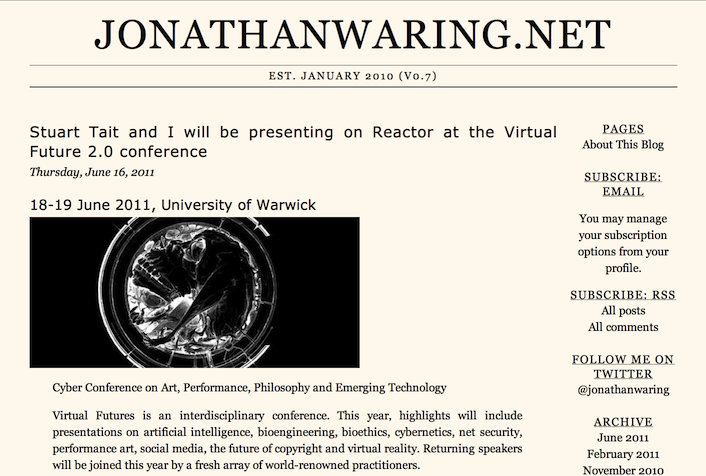
jonathanwaring.net v0.7jonathanwaring.net at v0.7
Share
16Jun/110

Stuart Tait and I will be presenting on Reactor at the Virtual Futures 2.0 conference

18-19 June 2011, University of Warwick

image dsc

Stuart Tait and I have been asked to make a presentation on Reactor at the Virtual Futures 2.0 conference. Here are some details of the conference from their website, and a little on what we have planned:

Cyber Conference on Art, Performance, Philosophy and Emerging Technology

Virtual Futures is an interdisciplinary conference. This year‚ highlights will include presentations on artificial intelligence, bioengineering, bioethics, cybernetics, net security, performance art, social media, the future of copyright and virtual reality. Returning speakers will be joined this year by a fresh array of world-renowned practitioners.

The list of main speakers is here:
http://virtualfutures.co.uk/vf2011/speakers/

The full programme is here (we're 15:20-15:40 on Sunday):
http://virtualfutures.co.uk/vf2011/programme/

And here's our abstract:
http://virtualfutures.co.uk/vf2011/programme/reactor-assemblages/

The presentation will discuss the work of UK-based art group Reactor from the perspective of one ‘guest’ member, Stuart Tait, and one ex or virtual member, Jonathan Waring. The presentation will take the form of a dialogue between Tait, who will be present at the conference, and Waring, who will be presenting via video projection.

Reactor’s practice creates ‘microcosmic worlds’ that thematically draw upon recognisable social forms, such as totalitarian states or self-help groups, in what artist and writer David Burrows refers to as ‘performance fictions’. These new collectivities are then performed or enacted in collaboration with audience-participants who take up positions within the work.

The presentation will begin by considering Reactor projects as ‘assemblages’, drawing upon the writing of Gilles Deleuze and Félix Guattari, and Manuel DeLanda’s development of their work in his Assemblage Theory of society. Erving Goffman’s concept of ‘role adjustments’ will then be used to discuss the way participants’ change positions within a project as it is enacted. The presentation will explore the relationship between the project, as it is actualised, and its virtual dimensions, such as the characteristics of a particular role, back-story for the project, memory, or project planning. Finally, Deleuze and Guattari’s concept of the diagram will be discussed in relation to Bergson’s cone diagram and the counteractualisation of the project back into the virtual of co-participants’ minds.

Share
4Feb/110

jonathanwaringphotography.co.uk

My photography portfolio website jonathanwaringphotography.co.uk now has its own hosting. Prior to this it lived in a sub-directory here at jonathanwaring.net. This caused various problems with the way it appeared in Google (and other) search listings, prompting the move.

The site documents some of the professional photography work I have done for clients. I initially worked documenting art gallery shows and live art events, before broadening my scope to produce images for a wider range of clients.

Please take a look if you have the time.

Share
5Nov/100

Paper on Reactor and ‘Big Lizard’s Big Idea’ to be presented at Chelsea Theatre symposium

Date: Sat 13 Nov, 9:30-21:15, Chelsea Theatre, London, £30/£20(students)

Daniel Oliver will be present a paper discussing ‘The efficacy of insincerity in Big Lizard’s Big Idea’ as part of the one day symposium ‘A Make Believe World’ during this year's Sacred Festival.

Big Lizard's Big Idea, 2009 (promo, 01:12)

In one of last month's posts I outlined Reactor’s pivotal 2005 work Total GHAOS. A work which came to define the group’s interests and mode of practice, as well as—more personally—marking the beginning of my four-year immersion in this practice as a member of the collective. Big Lizard’s Big Idea was the final project on which I worked with Reactor. Initially co-commissioned by the Donau Festival (Austria, April-May 2009) and Wunderbar Festival (UK, November 2009), the project then happened a third time without my involvement at Schirn Kunsthalle's ‘Playing the City 2’ (Germany, September 2010).

Daniel's paper will, "...evaluate the efficacy of Reactor’s practice of ‘relational insincerity’ by comparing the performative force of our behaviour as participants in the Big Idea with our behaviour towards the big Other of liberal capitalism. This comparison employs Slavoj Žižek’s elaboration of ‘the performative force of ideological illusion itself’, and David McNeill’s discussion of ‘Corporate Sincerity’ and ‘Pragmatic a-sincerity’".

Unfortunately I am unable to attend the symposium due to other commitments, but the outline Daniel has sent me is intriguing and I look forward to reading the paper in full. Hopefully—with Daniel's permission—I will be able to reproduce and discuss it here in more detail in the future.

A full programme for the symposium can be downloaded here and booking information can be found here.

Share
2Nov/100

Patience, Patience…

Spotted!

Yesterday someone was clearly intrigued enough by part one of Summing Up: Žižek and Environmentalism (Sunday, October 3, 2010) that he or she made the—admittedly fairly small, but still somewhat flattering—effort to induce that the URL of the draft of part two would be the same, but end in ‘part-2’. (It doesn't anymore.) Whoever you are (from Allendale, Michigan USA—if Google Analytics is to be believed), I hope what you read doesn't put you off coming back for the finished version. This second part is still only at a very early stage and is mainly notes, the final series will likely reach three parts.

For those not quite so eager—but now feeling left out—part two moves across Žižek’s occasional, put unfortunately pervasive, tendency toward a loose use of anecdotal evidence (particularly in his use of scientific anecdotes), before focusing on an exploration of two of the five ‘mass extinction’ events in Earth’s history: the more well known ‘K-T extinction event’, and the—to me, far more fascinating—‘late Devonian extinction’. They are both interesting enough in their own right, so, if you're curious, why not look them up on Wikipedia right now? Otherwise, please be patient for the next part of my post.

In the meantime, here is a recap of my two previous posts on Žižek and his perspective on environmental matters, which form the background to the current series:

Share
22Oct/102

AxisofLacan: Twitter as aesthetic-technical discipline

When writing this blog I have—so far—tried to avoid short note-like thoughts, or simple ‘stamp collecting’ reposts of links and information already available on other sites and blogs. The conscious rational for this has been—at least in part—that, not functioning in an academic context, I am unlikely to have any papers or books published anytime soon; and therefore, it is important to me that this blog stand up as ‘a work in itself’. This choice of phrase also—I think—points toward a second probably reason: my background as artist, which—for me at least—seems to make it an irresistible temptation to think of all production in terms ‘the work’, which therefore then demands a certain level of substance and consistency in order to function as such. This doesn't mean finished or complete, in fact, it is central to the form and purpose of this blog that it remain plastic, malleable and a ‘work in progress’—yet work [in progress] it remains, and as such requires a certain aesthetic ‘rightness’ (the definition of which will remain ambiguous, so as to leave space for the potential of the pathological).

This decision about the focus of this blog then, of course, appears to create a particular function for Twitter: a place for links, note-like thoughts, and immediate dialog. However: a) despite myself, I still get entangled in having tweets function with a phrased ‘rightness’ (they don't escape being ‘works’), and b) 140 characters is often just not enough to say many things that combine both being worth saying and relative complexity (although this does make for an interesting discipline).

I have an interest in the way contingent technical forms can ‘go beyond themselves’ and shape what can-or-can't-be-done, and what can-or-can't-be-said.

The technical 140 Twitter character limit was itself born of a similarly technical 160 character limit on SMS messages—in order that, in the early days, Twitter could ‘piggyback’ on the popularity and ubiquity of this service (with the remaining 20 characters being reserved for the Twitter username). Arguably Twitter has little need for the SMS service today, but, as is the nature of evolved systems, once it's there and built upon, you're stuck with it (unless it, and everything built upon it, becomes redundant). Nobody responsible for creating the SMS standard anticipated Twitter, yet their decision about what length a brief informal message should be, directly produced the technological reality that in turn formed a lower character limit for Twitter. Now, whilst I would expect that the 160 character SMS limit also has its own technical ‘ground’, it must in part be the length it is because that was considered, by its designers, to be an ‘ideal’ for this particular kind of communication.

Having used Twitter for a while now, I feel confident in saying that there is a fundamental difference between what—and how—you can communicate in 140 characters as opposed to 160. An analogy would be the disproportionate difference a change in financial income makes, when it is from earning at a level that just covers basic needs, to earning at any amount above this (until you find more expensive ‘basic needs’, of course).

An idle speculation that emerges is: what would the ‘tweet-o-sphere’ look like if the original technical limitation of the SMS platform had been different (or was never based on SMS)?

A practical question identified is: do I require some other platform in between Twitter and this blog (or to change my usage of this blog)?

A formal aesthetic result (‘the work’) is: an attempt, by myself earlier today, to explain via Twitter the Lacanian concepts of the Real, the Symbolic and the Imaginary, in relation to Mark Fisher’s notion of ‘Capitalist Realism’. Although there was some discussion afterwards, my basic explication (I feel I am rather pushing the meaning of that work here) was 10 tweets long.

The tweet that started it all was:

Central to the efficacy of #CapitalistRealism is its genuine—objective—symbolic existence; in Lacanian terms, that's a tough nut to crack...

Which prompted a response:

AxisofElvis Axis of Elvis
@jonathanwaring say more ...

Resulting in those 10 tweets:

@AxisofElvis Very crudely, in the Lacanian triad: Real-Symbolic-Imaginary—the Real = the original trauma engendered by the failure of the…

@AxisofElvis …Symbolic order to ever fully represent either itself or the inaccessible Real. Imaginary = inner space of self-identification…

@AxisofElvis …the Imaginary has limited efficacy unless it can be translated into the social realm of the Symbolic—think of the derision…

@AxisofElvis …often provoked by the figure of the ‘Goth’ or ‘Wigger’ (at least, in part, the result of a mismatch between Imaginary…

@AxisofElvis …self-identification and the social Symbolic order). The Symbolic order structures social relations and social meaning, and so…

@AxisofElvis …in some ways, can be thought of as, paradoxically, the most ‘real’ of the three. Mark Fisher (@kpunk99) makes a good example…

@AxisofElvis …in Capitalist Realism apropos of Gerald Ratner—(almost) everyone knew the jewellery he sold was ‘crap’, but when he publicly…

@AxisofElvis …admitted this to the ‘big Other’—and thus inscribed it within the Symbolic order—he lost his job & the company lost millions.

@AxisofElvis It is in that sense that—irrespective of its inconsistencies and falsehoods—#CapitalistRealism is ‘a tough nut to crack’…

@AxisofElvis …as—viewed through a Lacanian ontology—it requires a ‘cracking’ of the Symbolic order itself.

In order to fit this explanation to the 140 character discipline, I wrote it out tweet-by-tweet (using Twitter's character counter) and then cut and paste it into a text editor, structuring the breaks where they more-or-less best fitted the sense being conveyed. I then cut and paste it back into Twitter and tweeted it consecutively, leaving no gaps for a reply, until the explanation cycle was finished.

I then swiftly apologised in advance, in case ‘say more ...’ hadn't really meant that much more. There then followed a more conversational form, but one in which the structural properties of the technological medium were still highly apparent.

Many questions remain (and answers, thoughts, and further questions are always welcome):

  • Does my explanation of Lacan ‘work’ (both in terms of its theoretical accuracy, and in its aesthetic form)?
  • Aside from the obvious social immediacy of Twitter, what might be gained through subordination to technical (and aesthetic) form?
  • To what extent might subordination to an aesthetic sensibility relate to extrinsic factors, and to when might it be considered pathological?
Share
7Oct/100

Total GHAOS: 5th Anniversary

On this day, five years ago, following a campaign of street actions, 'raleighs' and worldwide stickering, the Dark Arts regime was finally overthrown. Cousins around the globe engaged their I.C.S. [Inner Conceptualising Space] and worked together to achieve the collective ideals of GHAOS and the ‘Reactor Party’: Total GHAOS was realised.

Total GHAOS was a microcosmic society built from scratch, a multi-storey scaffolding utopia (inside an otherwise unassuming—but spacious—light-industrial unit), and absolute replacement for the old world outside (which no longer existed).

Total GHAOS, Reactor (2005)

Entering Total GHAOS cousins left behind their old identities, timepieces, and mobile phones in order to begin their new lives. As GHAOS Actors [i.e. the audience] they sacrificed their own opinions to become cogs in the GHAOS machine. Hundreds of GHAOS Actors were required to perform simultaneously in order for the system to function, eliminating the last traces of REXist non-participation.

GHAOS Sticker Action, Toronto, Canada

GHAOS Sticker Action, Toronto

Following an interview and bureaucratic processing, new cousins each received their workpass, badges and Party manifesto. They were then given their first role: perhaps it was the mundane but essential function of ‘unit clock’, counting out—by hand—the units of time that regulated work and play within the microcosm; or maybe their task was to replace the person who had interviewed them—the dynamics of authority becoming suddenly reversed, as they were themselves charged with interrogated newer arrivals (whilst bluffing through their own limited knowledge).

Total GHAOS encompassed hundreds of interlinked roles in its hierarchical system. Cousins could find themselves in the lower levels: working on the potato farm, or drafted into the army. Or perhaps, as a result of hard work in the badge-making factory (making badges for new cousins), they found themselves moving upward, gaining access to higher strata jobs and cultural activities: becoming curator of the Museum of GHAOTIC Artefacts; or a student at the GHAOS Art Institute (KIVPA). For the most committed GHAOS Actors even a seat on the Supreme Council was a possibility.

Total GHAOS: Group Exercises

Group Exercises

But the dark suspicion of REXist deviance and non-participation was ever present. Taking their cue from the unblinking eyes of the ever-watchful LYNX (totem animal and emblem of the Reactor Party), cousins remained ever vigilant for the influence of Skepticus REX and the dark taint of REXimalism. Nobody was beyond suspicion, and cousins guilty of REXist behaviour risked re-education in the Arkwright Asylum.

Total GHAOS ran for three days, and when it finished it brought an end to the ‘Reactor Party’ and the two-year long—rhizomatically developed—GHAOS project. If you weren’t there, then our apologies cousin, but Total GHAOS was reached without you.

Total GHAOS: 6 Unit Hate

6 Unit Hate

I first worked with Reactor during the ‘Reactor Party’ campaign in the lead up to Total GHAOS. Following my experience working with Reactor on Total GHAOS I joined the group, initially as Secret Member (2005-2006) and then as a core member of the collective from 2006 until my departure at the end of 2009.

For the purposes of historical analysis, the GHAOS project website can be viewed at: www.ghaos.org

Reactor's more recent and current projects are documented over at: www.reactorweb.com

Share
Tagged as: , , No Comments
3Oct/100

Summing Up: Žižek and Environmentalism (Part 1)

Before moving on to other topics, I am returning here once more to Žižek. Following my previous posts addressing his stance toward recycling, it seems appropriate to also consider his wider position with regards to something that I would term ‘environmentalism’, but which—in the following video clip—Žižek (incorrectly) refers to as ‘ecology’. Perhaps, by ecology he rather intends to mean ‘ecological movement’ (see: Wikipedia: Ecology Disambiguation), ecology itself being something quite distinct in meaning from environmentalism—see: Wikipedia: Ecology:

Ecology (from Greek: οἶκος, "house" or "living relations"; -λογία, "study of") is the scientific study of the distributions, abundance and relations of organisms and their interactions with the environment. Ecology includes the study of plant and animal populations, plant and animal communities and ecosystems. Ecosystems describe the web or network of relations among organisms at different scales of organization. ... Ecology is not synonymous with environment, environmentalism, or environmental science. Ecology is closely related to the disciplines of physiology, evolution, genetics and behavior.

In this video clip (from the 2008 film ‘Examined Life’ by Astra Taylor) Žižek’s basic position with respect to ‘environmentalism’—if not his actual opinions about specific environmental issues—become clear:

Žižek’s 10 minute section from ‘Examined Life’

Žižek stance is explicitly against the romantic conception of nature, and the related myth of the ‘natural’ as a ‘balanced harmony’. In fact, in his refusal of the term itself—‘there is no nature’—it seems that, for Žižek, nature is inescapably tainted with romanticism—with romantic ideology. ‘Nature’ is ideological in the sense that its very idea appears inescapably bundled together with a particular ‘attitude’ toward itself: this attitude is that it (nature) should be considered as an separate entity (separate from something which we must then presume to be ‘non-nature’); that it should be considered something ‘over there’, apart from us; and as something distinct in itself, static in its identity and therefore requiring ‘preservation’ from the encroachment of said non-nature. For an excellent explanation and expansion of this idea and its Hegelian roots, see Timothy Morton’s video ‘Beautiful Soul Syndrome’ (at 7:44)—I’d also highly recommend the other two parts in this series.

A common Žižekian theme is the identification of the political right with the notion that society was once a balanced harmonious system, with everything and everybody in its ‘proper place’ and—by extension—the idea that this perfection could once again be regained, were not for the external (‘virus’, ‘parasite’) or internal (‘cancer’) disruptive elements at odds with natural order of the social body. Be these disruptive threats identified in ideas (social, intellectual or political positions; artistic movements; or a more general notion of corruption of traditional values; etc.) or embodied in the idealisation of a specific group as disruptive in itself (Jew, other specific ethnic or religious group, immigrant, internal political subversive, ‘deviant’ etc.), in the imagination of the right they represent not only an obstacle to a return to Edenic harmony, but also further threaten what ‘still remains’ of it.

Žižek contrasts this with what he considers to be the position of a genuine left, which is constituted in an acknowledgement that class struggle exists as the inescapable base of all social orders.1 (See: For They Know Not What They Do, Preface to the Second Edition, note 16, p.xcv) Class struggle, in this sense, should not be thought of purely—as it popularly and simplistically is—as antagonisms of interest between crude monolithic-homogenous blocks (proletariat vs. bourgeoisie etc.), but rather—I would contend—between a profusion of both ‘micro’ and ‘macro’ classes, shifting and overlapping in their interests and therefore their various degrees of conscious and unconscious antagonism. Within this schema, individuals may exist in many classes simultaneously, and are not permanently fixed in their membership (it is crucial here not to make the error in thinking that this implies individuals are somehow in a position to ‘choose’ which classes they belong to—when this is properly understood the ideology at work in the idea ‘lifestyle’ becomes apparent). In this way a geniuine left recognises that, not only are our contemporary societies neither balanced nor harmonious, but that they never were, and never truly can be.

Following on from this acceptance, there comes an additional role for the left: the role of the social mediation of class antagonisms according to an egalitarian principle. It seems clear, from the acceptance of fundamental division, that such a mediating principle would be dialectical in character; for, despite any and every successful egalitarian mediation (though worthwhile in its own right) the process would never be able to fully ‘catch up’ with the fundamental and inescapable split which constitutes society itself.2

It is against the background of these ideas that Žižek’s opposition to the ideological mystification of ‘nature’ (or more precisely, the ideological mystification inherent in the idea of nature itself) should be read. Instead of the more commonplace line of one arguing for the removal of an unhelpful division between humankind and nature—that humans are ‘a part of nature’ and so should therefore seek to replicate or ‘live within’ nature's own ‘natural balance’—he instead maintains that ‘there is no nature’. By this he intends that, as with the myth of a balanced society, the myth of balance or harmony in nature is exactly that—a myth.

To what extent can his analysis be considered justified, and is there really a danger—as Žižek claims in the video—of environmentalism becoming ‘a new opium of the masses’?

In the second part of this post I will explore Žižek’s conceptions of ‘balance’ and ‘nature’ further—in the context of extinction events in Earth’s prehistory—and challenge this provocative claim.

Footnotes:
  1. Given these definitions of left and right, it is worth noting the tendency for revolutionary movements of the left to shift almost immediately to an effective position of the right (albeit with a different foundational myth and symbolisation) upon taking power.
  2. It is worth thinking about this in relation to the debate between reform versus revolution. If no amount of mediation can equal an infinite mediation that would be required to heal that which cannot be healed (as it was never wounded in the first place), then why might a bigger step (revolution) any more appropriate than a series of smaller steps? (ongoing iterative reform). It is also worth considering how a society might correctly apprehend and assemble such an egalitarian principle in the first place.
Share